Mac Os Sierra Generate Ssh Key
- Generate Ssh Key On Mac
- Generate Ssh Key Putty
- Mac Os Sierra Generate Ssh Keyboard
- Generate Ssh Key Github
- Oct 17, 2019 How to create SSH keys in macOS and Linux October 17, 2019. SSH keys are a means of authenticating a user to an SSH server without using a password. Each “key” is actually a key pair consisting of a public key and a private key. The process involves generating a pair of SSH key files containing a private key and a public key.
- Adding your SSH key to the ssh-agent. Before adding a new SSH key to the ssh-agent to manage your keys, you should have checked for existing SSH keys and generated a new SSH key. When adding your SSH key to the agent, use the default macOS ssh-add command, and not an application installed by macports, homebrew, or some other external source.
- Difficulties with ssh-agent in macOS Sierra So it looks like Apple changed the behaviour of the ssh-agent in macOS Sierra. Now it does not autoload all the keys in the keychain that were added with ssh-add -K, so you must explicitly call ssh-add -A.
SSH keys are a means of authenticating a user to an SSH server without using a password. Each “key” is actually a key pair consisting of a public key and a private key. Keys are more secure than passwords because they are significantly more complex.
While a password of eight characters is 72 bits long, SSH keys are often 2048 bits or longer. This longer string has many more possible permutations and therefore takes much more time to crack with a brute force attack.
If you require SSH access for multiple users, the use of SSH keys instead of individual logins can bypass many of the headaches involved in user management without violating PCI DSS. See What are the advantages of using SSH keys to control access for multiple users? for details.
Generate Ssh Key On Mac
Method
The process involves generating a pair of SSH key files containing a private key and a public key. The private key is known only to the user’s computer; the public key will be known to the server. Teamviewer 14 serial key generator. Each key is useless without the other; therefore, only individuals with both the private and the public key can gain access to the server, and the private key is never revealed to the server.
Users should take special care to not lose the private key. A lost private key cannot be replicated; therefore, the user cannot access the server until an administrator generates a new key pair. If you lose access to your server due to a lost key, contact our Support Team for assistance.
1: Create and save the SSH key files
I do not understand what they mean by 'modify your /.ssh/config file ' & the Host. AddKeysToAgent yes UseKeychain yes IdentityFile /.ssh/idrsa. Ssh-add -K /.ssh/idrsa does not work on terminal either, as the results says 'no such file or directory' I saved the key file to my Desktop folder when ssh-keygen prompted me for a location. You can add as many keys as you like and ssh-add -l will show you which keys are registered. When you reboot, you’ll notice that ssh-add -l is empty which is different from how it works on macOS 10.11 and earlier which automatically re-added the keys it knew about. In Sierra, Apple has changed it so that you now need to explicitly add the. MacOS Sierra doesn’t seem to remember SSH keys between reboots. Type in ssh-add -l and you should see one lone SSH key. I updated to Mac OS X Sierra (10.12.6.
- Issue the ssh-keygencommand; see the example below:
- The keys save to the default location or, if one was specified, in a separate file. Choose one:
- If you do want a passphrase, type it now and hit Enter. Type the passphrase again when prompted.
- If you do not want a passphrase, hit Enter twice in succession without entering a passphrase.
- If you do want a passphrase, type it now and hit Enter. Type the passphrase again when prompted.
- You will now see the identification fingerprint for the SSH key. This image is automatically generated.
2: Transfer the public key file to the receiving server
- If you are a Nexcess Cloud client, log in to your Client Portal to add the key. If you cannot find your login credentials, either click Forgot Password? on the login page, or contact our 24/7 support team.
- If you are not a Nexcess Cloud client, the easiest method-of-transfer uses the ssh-copy-id command. Run the ssh-copy-idcommand with the same arguments used for connecting to the server using the sshcommand:
3:Test the connection
- Issue the following command:
- Select Yes to accept the key fingerprint.
- Attempt to log in to the server. If ssh key authentication is functioning properly, you will log in successfully.
- If prompted, type the passphrase created in 1: Create and save the SSH key files.
Generate Ssh Key Putty
Mac Os Sierra Generate Ssh Keyboard
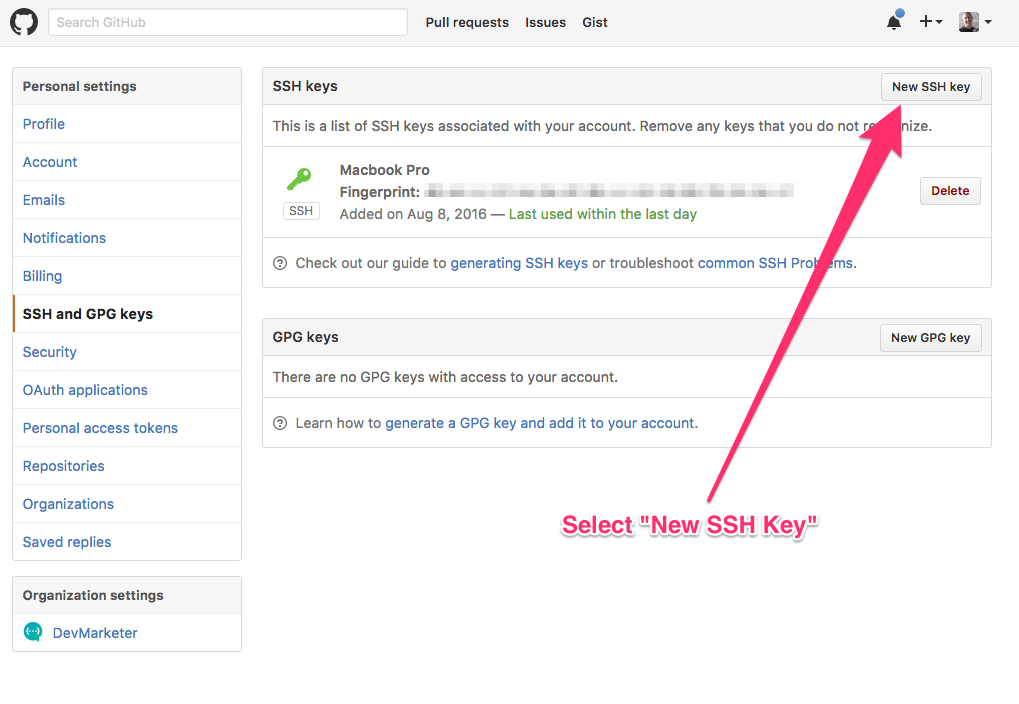
Generate Ssh Key Github
For 24-hour assistance any day of the year, contact our support team by email or through your Client Portal.