Generate Ssh Key Ubuntu 16.04
- Generate Ssh Key Ubuntu 16.04 Windows 7
- Ubuntu 16 Install Ssh
- Generate Ssh Key Ubuntu
- Generate Ssh Key Aix
- Install Ssh Ubuntu 16.04
How to add Public Key Authentication for Ubuntu 16.04 server Published by Igor Khrupin on 25 November, 2017 For better security we should use public key authentication on the server. You can generate a new private key by running the following command on a client machine. Ssh-keygen Depending on which algorithm was used add the contents of the /.ssh/id.pub file to the /.authorizedkeys file on the server. Setup OpenSSH Key Authentication (Passwordless) on Ubuntu 16.04 LTS Server Step 1: Install Secure SHell on Ubuntu 16.04 Server. Step 2: Generate the Client’s SSH Key Linux Machines. Step 3: Copy the client SSH key to the server. Step 4: Configuring openSSH server. After the changes above, save.
- Aug 24, 2016 SSH, or Secure Shell, is a protocol used to securely log onto remote systems. It is the most common way to access remote Linux and Unix-like servers, such as VPS instances. In this guide, we will discuss how to use SSH to connect to a remote system I’ll be logged in as root. Set up SSH server on Ubuntu 16.04. Step 1 – Update repositories.
- Dec 07, 2019 SSH works using a key pair; the public key and the private key. The private key is kept on the computer you log in from, while the public key is stored in the.ssh/authorizedkeys file on all the computers you want to log into. The public key stored on the server you wish to unlock and by matching the private pair, you are able to unlock the system.
Introduction
Establishing an SSH (Secure Shell) connection is essential to log in and effectively manage a remote server. Encrypted keys are a set of access credentials used to establish a secure connection.
This guide will walk you how to generate SSH keys on Ubuntu 18.04. We will also cover setting up SSH key-based authentication to connect to a remote server without requiring a password.
- A server running Ubuntu 18.04
- A user account with sudo privileges
- Access to a terminal window / command line (Ctrl-Alt-T)
If you are already running an Ubuntu 18.04 server, you can skip this step. If you are configuring your server for the first time, you may not have SSH installed.
1. Start by installing the tasksel package:
The system will first ask for confirmation before proceeding:
2. Next, use tasksel to install the ssh-server:
3. Load the SSH server service, and set it to launch at boot:
On your client system – the one you’re using to connect to the server – you need to create a pair of key codes.
To generate a pair of SSH key codes, enter the commands:
This will create a hidden directory to store your SSH keys, and modify the permissions for that directory. The ssh-keygen command creates a 2048-bit RSA key pair.
For extra security, use RSA4096:
If you’ve already generated a key pair, this will prompt to overwrite them, and those old keys will not work anymore.
The system will ask you to create a passphrase as an added layer of security. Input a memorable passphrase, and press Enter.
This process creates two keys. One is a public key, which you can hand out to anyone – in this case, you’ll save it to the server. The other one is a private key, which you will need to keep secure. The secure private key ensures that you are the only person who can encrypt the data that is decrypted by the public key.
Step 2- Copy Public Key to the Ubuntu Server
First, get the IP address of the Ubuntu server you want to connect to.
In a terminal window, enter:
The system’s IP address is listed in the second entry:
On the client system, use the ssh-copy-id command to copy the identity information to the Ubuntu server:
Replace server_IP with the actual IP address of your server.
If this is the first time you’re connecting to the server, you may see a message that the authenticity of the host cannot be established:
Type yes and press Enter.
Nintendo ds master key generator. However, being that it's old, it doesn't have any new boards. We do finally have SM access though so I can collect all of the streetpass tags with it.
The system will check your client system for the id_rsa.pub key that was previously generated. Then it will prompt you to enter the password for the server user account. Type it in (the system won’t display the password), and press Enter.
The system will copy the contents of the ~/.ssh/id_rsa.pub from the client system into the ~/.ssh/authorized_keys directory of the server system.
Colts Game Day Thread All posting during Colts game time that is about the game, must either be in the game day thread or in chat Keygen the sims 1. Keygen the sims 1. The sims 1 cd key generator download.
The system should display:
If your system does not have the ssh-copy-id command, you can copy the key manually over the SSH.
Use the following command:
To log in to a remote server, input the command:
The system should not ask for a password as it is negotiating a secure connection using the SSH keys. If you used a security passphrase, you would be prompted to enter it. After you do so, you are logged in.
If this is the first time you’ve logged into the server, you may see a message similar to the one in part two. It will ask if you are sure you want to connect – type yes and press Enter.
Step 4- Disable Password Authentication
This step creates an added layer of security. If you’re the only person logging into the server, you can disable the password. The server will only accept a login with your private key to match the stored public key.
Edit the sshd_config file:
Search the file and find the PasswordAuthentication option.

Edit the file and change the value to no:
Generate Ssh Key Ubuntu 16.04 Windows 7
Save the file and exit, then restart the SSH service:
Verify that SSH is still working, before ending the session:
If everything works, you can close out and resume work normally.
By following the instructions in this tutorial, you have setup SSH-key-based authentication on an Ubuntu 18.04 server.
The connection is now highly secure as it uses a set of unique, encrypted SSH keys.
Next you should also read
Learn how to set up SSH key authentication on CentOS to safely communicate with remote servers. Create the…
When establishing a remote connection between a client and a server, a primary concern is ensuring a secure…
Nginx is an open-source server utility designed to work as a reverse proxy, intercepting client requests and…
In this tutorial, Find out How To Use SSH to Connect to a Remote Server in Linux or Windows. Get started with…
SSH keys are a necessity for Python development when you are working withGit, connecting to remote servers and automating yourdeployments. Let's walk through how to generate SSHkey pairs, which contain both a public and a private key within a singlepair, on Ubuntu Linux.
Generating the Public and Private Keys
Open up a new terminal window in Ubuntu like we see in the followingscreenshot.
The ssh-keygen command provides an interactive command line interface forgenerating both the public and private keys. Invoke ssh-keygen with thefollowing -t and -b arguments to ensure we get a 4096 bit RSA key.Optionally, you can also specify your email address with -C (otherwiseone will be generated off your current Linux account):
Ubuntu 16 Install Ssh
(Note: the -o option was introduced in 2014; if this command fails for you, simply remove the -o option)
The first prompt you will see asks where to save the key. However, there areactually two files that will be generated: the public key and the privatekey.
This prompt refers to the private key and whatever you enter will alsogenerate a second file for the public key that has the same name and .pubappended.
If you already have a key, you should specify a new filename. I use manySSH keys so I typically name them 'test-deploy', 'prod-deploy', 'ci-server'along with a unique project name. Naming is one of those hard computerscience problems, so take some time to come up with a system that works foryou and the development team you work with!
Generate Ssh Key Ubuntu
Next you will see a prompt for an optional passphrase:
Whether or not you want a passphrase depends on how you will use the key.The system will ask you for the passphrase whenever you use the SSH keyso it is more secure.However, if you are automating deployments with acontinuous integration server likeJenkins then you will not want a passphrase.
Be aware that it is impossible to recover a passphrase if it is lost. Keepthat passphrase safe and secure because otherwise a completely new key wouldhave to be generated.
Enter the passphrase (or just press enter to not have a passphrase) twice.You'll see some output like the following:
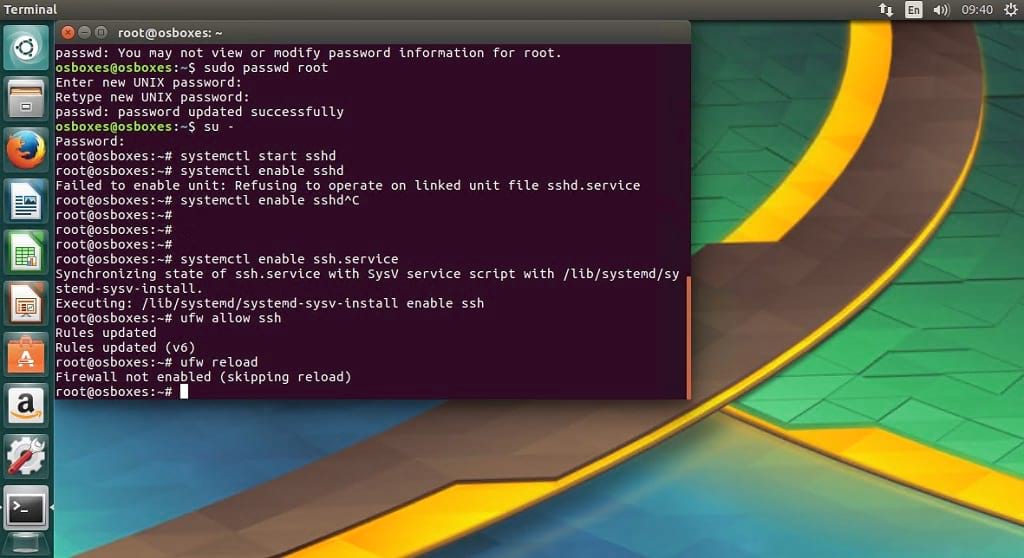
Your SSH key is now generated and ready to use!
What now?
Now that you have your public and private keys, I recommend settingup a Python development environment withone of the following tutorials so you can start coding:
Generate Ssh Key Aix
Additional ssh-keygen command resources:
Questions? Contact me via Twitter@fullstackpythonor @mattmakai. I'm also on GitHub withthe username mattmakai.
Install Ssh Ubuntu 16.04
See something wrong in this post? Forkthis page's source on GitHuband submit a pull request.