Generate Ssh Key Pair Windows
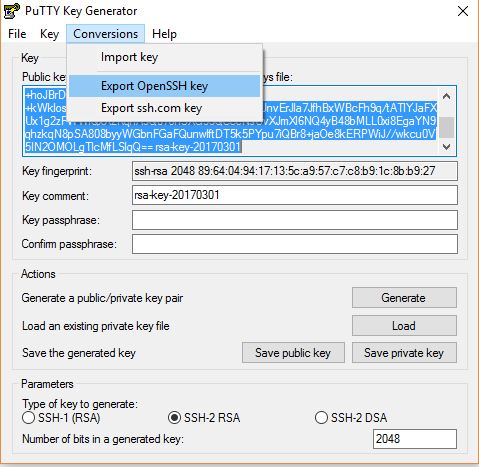
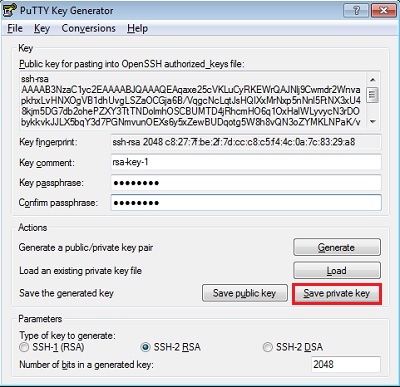
- To generate a key pair with the PuTTY key generator, simply run puttygen.exe and click the Generate button in the window that appears. You will be asked to move the mouse and press keys to improve the random number generation at the heart of SSH security.
- Warning: If you are saving your keys under C:/User/username/.ssh ( the default place), make sure to back up your keys somewhere (eg your password manager). After the most recent Windows 10 Update (version 1607), my.ssh folder was empty. This is where my keys have always been, but Windows decided to delete them when updating.
- How To Generate Ssh Keys
- Generate Ssh Public Key Windows
- Windows-generate-ssh-key-pair-with-puttygen
- How Generate Ssh Key Pair In Putty Windows
- Create Ssh Keys Windows
- Generate Ssh Key Github
Most authentication in Windows environments is done with a username-password pair.This works well for systems that share a common domain.When working across domains, such as between on-premise and cloud-hosted systems, it becomes more difficult.
By comparison, Linux environments commonly use public-key/private-key pairs to drive authentication.OpenSSH includes tools to help support this, specifically:
To create a new key pair, select the type of key to generate from the bottom of the screen (using SSH-2 RSA with 2048 bit key size is good for most people; another good well-known alternative is ECDSA). Then click Generate, and start moving the mouse within the Window. Putty uses mouse movements to collect randomness.
- ssh-keygen for generating secure keys
- ssh-agent and ssh-add for securely storing private keys
- scp and sftp to securely copy public key files during initial use of a server
This document provides an overview of how to use these tools on Windows to begin using key authentication with SSH.If you are unfamiliar with SSH key management, we strongly recommend you review NIST document IR 7966 titled 'Security of Interactive and Automated Access Management Using Secure Shell (SSH).'
About key pairs
Key pairs refer to the public and private key files that are used by certain authentication protocols.
SSH public-key authentication uses asymmetric cryptographic algorithms to generate two key files – one 'private' and the other 'public'. The private key files are the equivalent of a password, and should protected under all circumstances. If someone acquires your private key, they can log in as you to any SSH server you have access to. The public key is what is placed on the SSH server, and may be shared without compromising the private key.
When using key authentication with an SSH server, the SSH server and client compare the public key for username provided against the private key. If the public key cannot be validated against the client-side private key, authentication fails.
Multi-factor authentication may be implemented with key pairs by requiring that a passphrase be supplied when the key pair is generated (see key generation below).During authentication the user is prompted for the passphrase, which is used along with the presence of the private key on the SSH client to authenticate the user.
Host key generation
Public keys have specific ACL requirements that, on Windows, equate to only allowing access to administrators and System.To make this easier,
Cd key generator star wars empire at war. The game is set in the early modern period, spanning from 1700 to the early 19th century allowing players to lead a variety of contemporary nations to dominate Europe, North Africa, the Americas and the Indies.Do you need serial number for Empire Total War?Our site offer you simple made key generator.Download, extract and use to generate a key.' Empire Total War Keygen ( Code Generator)Download from site:www.virtualgamehacks.com/index.php/empire-total-war-keygenJust founded on virtualgemehacks.comQuote'Empire: Total War is focused on exploration, economics, politics, religion, the founding of colonies and, ultimately, conquest.
- The OpenSSHUtils PowerShell module has been created to set the key ACLs properly, and should be installed on the server
- On first use of sshd, the key pair for the host will be automatically generated. If ssh-agent is running, the keys will be automatically added to the local store.
To make key authentication easy with an SSH server, run the following commands from an elevated PowerShell prompt:
Since there is no user associated with the sshd service, the host keys are stored under ProgramDatassh.
User key generation
To use key-based authentication, you first need to generate some public/private key pairs for your client.From PowerShell or cmd, use ssh-keygen to generate some key files.
This should display something like the following (where 'username' is replaced by your user name)
You can hit Enter to accept the default, or specify a path where you'd like your keys to be generated.At this point, you'll be prompted to use a passphrase to encrypt your private key files.The passphrase works with the key file to provide 2-factor authentication.For this example, we are leaving the passphrase empty.
Now you have a public/private ED25519 key pair(the .pub files are public keys and the rest are private keys):
Remember that private key files are the equivalent of a password should be protected the same way you protect your password.To help with that, use ssh-agent to securely store the private keys within a Windows security context, associated with your Windows login.To do that, start the ssh-agent service as Administrator and use ssh-add to store the private key.
After completing these steps, whenever a private key is needed for authentication from this client, ssh-agent will automatically retrieve the local private key and pass it to your SSH client.
Note
It is strongly recommended that you back up your private key to a secure location,then delete it from the local system, after adding it to ssh-agent.The private key cannot be retrieved from the agent.If you lose access to the private key, you would have to create a new key pairand update the public key on all systems you interact with.
Deploying the public key
To use the user key that was created above, the public key needs to be placed on the server into a text file called authorized_keys under usersusername.ssh.The OpenSSH tools include scp, which is a secure file-transfer utility, to help with this.
To move the contents of your public key (~.sshid_ed25519.pub) into a text file called authorized_keys in ~.ssh on your server/host.
This example uses the Repair-AuthorizedKeyPermissions function in the OpenSSHUtils module which was previously installed on the host in the instructions above.
These steps complete the configuration required to use key-based authentication with SSH on Windows.After this, the user can connect to the sshd host from any client that has the private key.
-->Most authentication in Windows environments is done with a username-password pair.This works well for systems that share a common domain.When working across domains, such as between on-premise and cloud-hosted systems, it becomes more difficult.
By comparison, Linux environments commonly use public-key/private-key pairs to drive authentication.OpenSSH includes tools to help support this, specifically:
- ssh-keygen for generating secure keys
- ssh-agent and ssh-add for securely storing private keys
- scp and sftp to securely copy public key files during initial use of a server
This document provides an overview of how to use these tools on Windows to begin using key authentication with SSH.If you are unfamiliar with SSH key management, we strongly recommend you review NIST document IR 7966 titled 'Security of Interactive and Automated Access Management Using Secure Shell (SSH).'
About key pairs
Key pairs refer to the public and private key files that are used by certain authentication protocols.
SSH public-key authentication uses asymmetric cryptographic algorithms to generate two key files – one 'private' and the other 'public'. The private key files are the equivalent of a password, and should protected under all circumstances. If someone acquires your private key, they can log in as you to any SSH server you have access to. The public key is what is placed on the SSH server, and may be shared without compromising the private key.
When using key authentication with an SSH server, the SSH server and client compare the public key for username provided against the private key. If the public key cannot be validated against the client-side private key, authentication fails.
Multi-factor authentication may be implemented with key pairs by requiring that a passphrase be supplied when the key pair is generated (see key generation below).During authentication the user is prompted for the passphrase, which is used along with the presence of the private key on the SSH client to authenticate the user.
Host key generation
Public keys have specific ACL requirements that, on Windows, equate to only allowing access to administrators and System.To make this easier,
- The OpenSSHUtils PowerShell module has been created to set the key ACLs properly, and should be installed on the server
- On first use of sshd, the key pair for the host will be automatically generated. If ssh-agent is running, the keys will be automatically added to the local store.
To make key authentication easy with an SSH server, run the following commands from an elevated PowerShell prompt:
Since there is no user associated with the sshd service, the host keys are stored under ProgramDatassh.
User key generation
To use key-based authentication, you first need to generate some public/private key pairs for your client.From PowerShell or cmd, use ssh-keygen to generate some key files.
This should display something like the following (where 'username' is replaced by your user name)
How To Generate Ssh Keys
You can hit Enter to accept the default, or specify a path where you'd like your keys to be generated.At this point, you'll be prompted to use a passphrase to encrypt your private key files.The passphrase works with the key file to provide 2-factor authentication.For this example, we are leaving the passphrase empty.
Now you have a public/private ED25519 key pair(the .pub files are public keys and the rest are private keys):
Generate Ssh Public Key Windows
Remember that private key files are the equivalent of a password should be protected the same way you protect your password.To help with that, use ssh-agent to securely store the private keys within a Windows security context, associated with your Windows login.To do that, start the ssh-agent service as Administrator and use ssh-add to store the private key.
Windows-generate-ssh-key-pair-with-puttygen
After completing these steps, whenever a private key is needed for authentication from this client, ssh-agent will automatically retrieve the local private key and pass it to your SSH client.
How Generate Ssh Key Pair In Putty Windows
Note
It is strongly recommended that you back up your private key to a secure location,then delete it from the local system, after adding it to ssh-agent.The private key cannot be retrieved from the agent.If you lose access to the private key, you would have to create a new key pairand update the public key on all systems you interact with.
Deploying the public key
To use the user key that was created above, the public key needs to be placed on the server into a text file called authorized_keys under usersusername.ssh.The OpenSSH tools include scp, which is a secure file-transfer utility, to help with this.
Create Ssh Keys Windows
To move the contents of your public key (~.sshid_ed25519.pub) into a text file called authorized_keys in ~.ssh on your server/host.
This example uses the Repair-AuthorizedKeyPermissions function in the OpenSSHUtils module which was previously installed on the host in the instructions above.
Generate Ssh Key Github
These steps complete the configuration required to use key-based authentication with SSH on Windows.After this, the user can connect to the sshd host from any client that has the private key.